
What is leak-proof design in vape devices?

Tired of customer complaints about leaky vapes? These issues can damage your reputation and eat into your profits. You need to understand what "leak-proof" really means from a manufacturer.
A truly leak-proof vape isn't about a single feature. It is a complete system that combines smart design, the right materials, and high-quality manufacturing. A great design will still leak if the factory makes it poorly. It's about the entire process, not just one part.
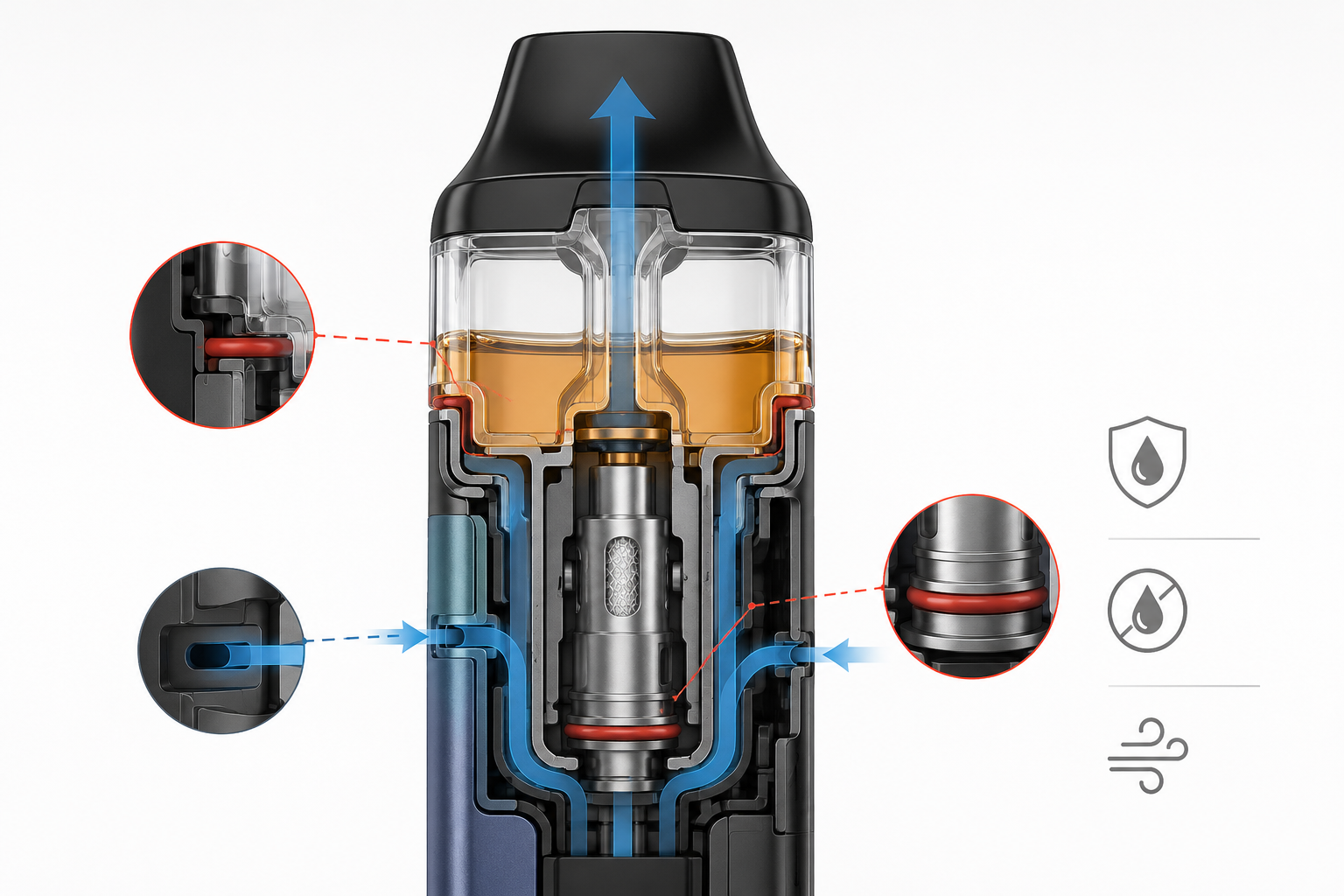
When I talk to clients, they often focus on a single advertised feature they believe will solve all their problems with leaks. From my 18 years of experience on the factory floor, I can tell you that it's never that simple. The reality is that preventing leaks is a balancing act between many different factors. A supplier who promises a single magic bullet is not being honest about the complexities of manufacturing. To protect your business, you need to look beyond the marketing and understand the full picture. Let's dive into what you should really be asking your suppliers.
Is a 'leak-proof' feature just a marketing claim?
Suppliers promise their device is "100% leak-proof" because of one new feature. You trust them, but then the product returns start stacking up, hurting your bottom line.
Often, yes. A term like "U-shaped airflow" is mostly for marketing. Its real-world performance depends on how it handles temperature changes, air pressure on a plane, and different e-liquid thicknesses. You should ask your supplier for their test data under these conditions, not just the feature name.
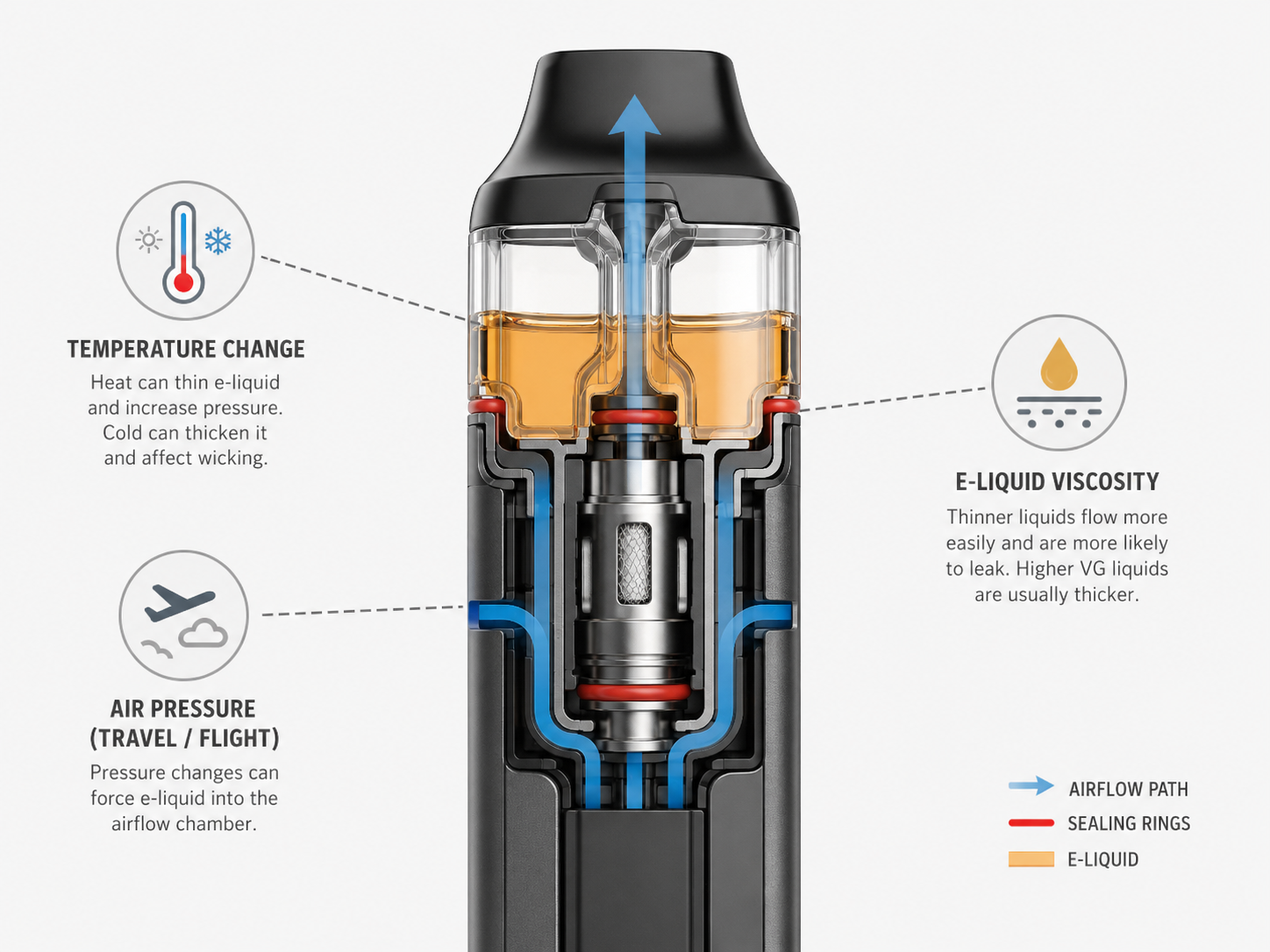
I've seen many clients come to us after being burned by a "revolutionary" leak-proof technology. They invested heavily in a product based on a brochure, only to face a wave of customer returns. The problem is that marketing terms don't tell you the whole story. A vape has to work in the real world, not just in a lab.
For example, when a vape gets hot in a car, the air and liquid inside expand, creating pressure that can force liquid out. When someone takes a flight, the change in cabin pressure can do the same thing. Even the e-liquid a customer uses matters. A thinner liquid (high PG) will flow much more easily than a thicker one (high VG) and can find its way through tiny gaps. A truly robust design accounts for these variables.
What to Ask Your Supplier
Instead of being impressed by a feature's name, you should ask questions that reveal how it actually performs. This shows a supplier you know what you're talking about.
| Marketing Claim | The Question You Should Ask |
|---|---|
| "Advanced U-Shaped Airflow" | "Can you show me your pressure test data? How does it perform during air pressure changes, like on a flight?" |
| "Triple-Layer Silicone Seals" | "What is the exact material and hardness of the seals? What are your quality control tolerances for their size?" |
| "Easy Top-Fill Design" | "How does the design release air pressure when the cap is sealed? This prevents liquid from being forced out." |
Is a better design always the solution to leaks?
You found a vape with a brilliant, innovative design. You think this must be the answer. But the devices that arrive are inconsistent, and many still leak, causing headaches.
No. A perfect design is worthless if the manufacturing is inconsistent. From my experience, the most common reason for leaks is not the design concept, but tiny errors in production. The quality of execution is more critical than the design itself.
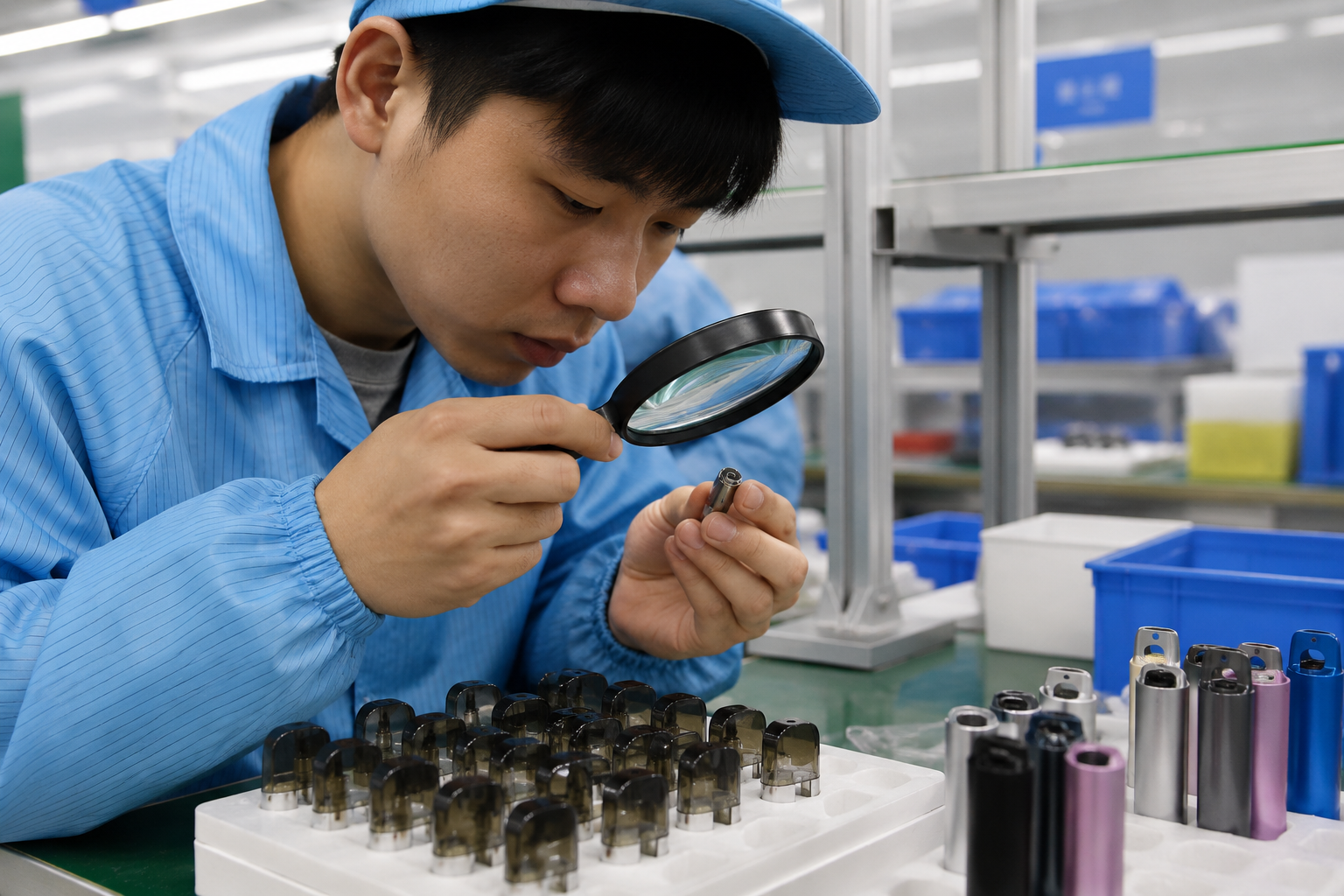
I've spent years overseeing production lines, and I can tell you that consistency is everything. A design engineer can create a perfect plan on a computer, but that plan has to be executed thousands of times without error. This is where most failures happen. For example, the O-rings that seal the device need to be a specific size and hardness. If a batch of O-rings is just a fraction of a millimeter too small, or the material is too soft, it won't create a proper seal. The same goes for the plastic parts. If the injection mold wears down over time, it can create tiny gaps that lead to leaks.
Another critical component is the cotton wick inside the coil. If the cotton is packed too tightly, it won't absorb liquid fast enough, leading to dry hits. If it's packed too loosely, the coil will flood and leak.
Key QC Checkpoints for Your Supplier
This is why you must ask potential suppliers about their quality control (QC) process. A good partner will be happy to show you how they ensure consistency.
- Incoming Component Inspection: Do they measure and test every batch of components they receive, like O-rings and casings? Ask them to show you their process.
- Assembly Line Audits: How do they ensure every worker assembles the device correctly? Are there automated checks or regular inspections on the line to catch errors early?
- Batch Testing: Do they take finished products from each production run and put them through rigorous tests? This should include pressure tests and leak tests with different types of e-liquid.
A supplier who is serious about preventing leaks will have solid answers to these questions.
Why is a leaky vape a major business risk for me?
You might think a few returns for leaky vapes is just the cost of doing business. But those small problems add up, creating negative reviews and damaging your brand's credibility.
A leaky vape is a direct threat to your business. It causes high return rates, which cost you money. It leads to negative reviews, which damage your reputation. And it breaks customer trust, which hurts your long-term sales and profitability. It's a serious risk.
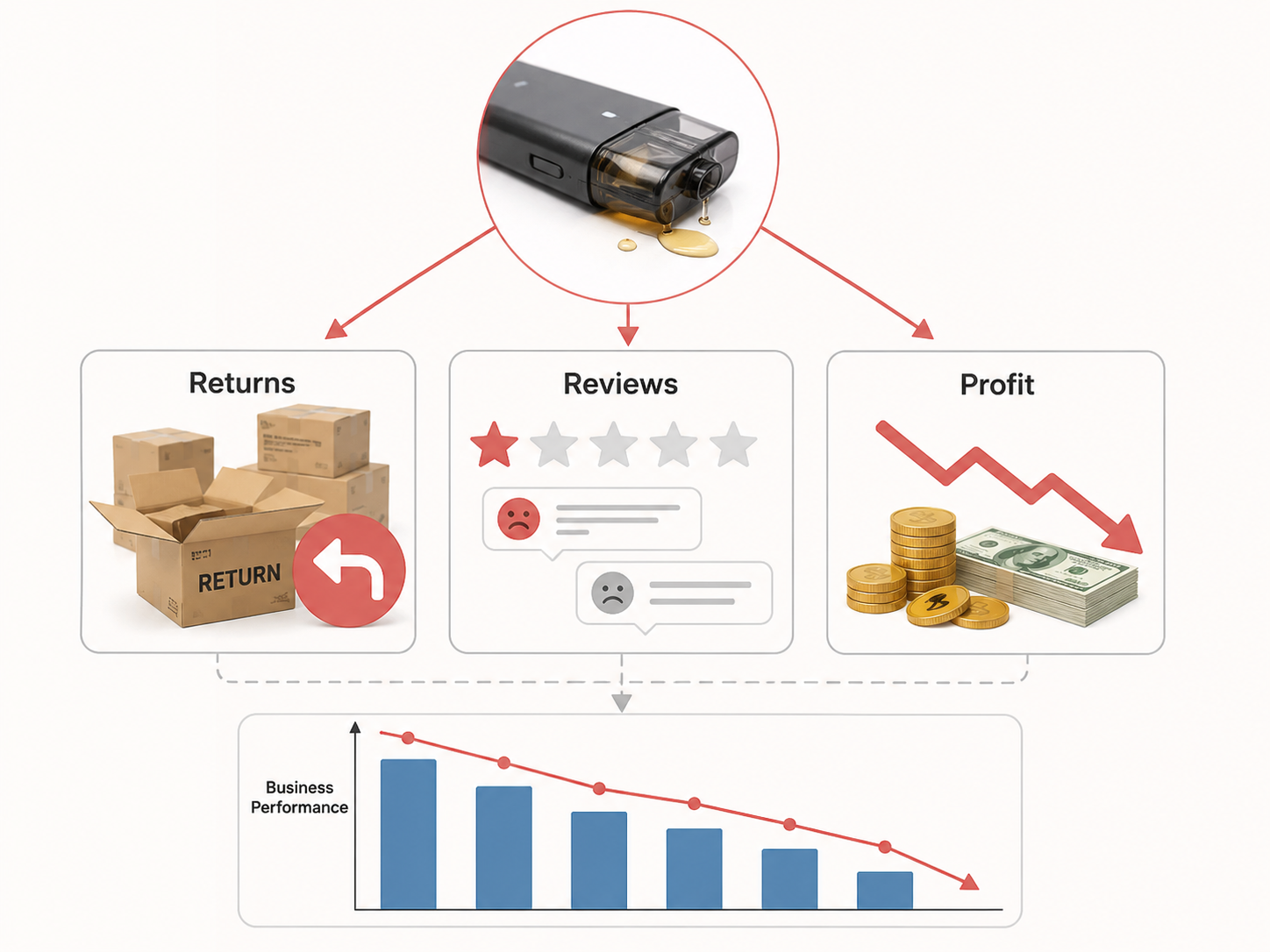
For you as a wholesaler or distributor, a leaky product is not a small problem. It's a cascade of costs that can seriously harm your business. We know this because we work with B2B clients every day, and we help them manage this risk. When a customer receives a leaky vape, they don't just blame the manufacturer; they blame you, the business that sold it to them. The first thing they do is go online and leave a bad review, warning other people not to buy from you. This brand damage is very difficult to repair.
Then there are the direct financial costs. You have to manage the logistics of the return, process the refund or replacement, and deal with the angry customer. All of this takes time and money away from growing your business.
Calculating the True Cost of Leaks
Think about the financial impact in these simple terms:
- Direct Costs: Every return costs you the price of the product, plus the shipping and labor costs to process it. This is a direct hit to your profit margin on every sale.
- Indirect Costs: This is the most dangerous cost. A single bad experience can lose you a customer forever. They won't just stop buying that one product; they will stop trusting your entire business.
- Brand Damage: Negative online reviews and word-of-mouth spread quickly. Your reputation is your most valuable asset, and leaky products are one of the fastest ways to destroy it.
When you choose a manufacturing partner, you are not just buying a product. You are choosing a partner to help you manage these risks.
Conclusion
"Leak-proof" is a system, not a single feature. To protect your business, you must look past marketing and focus on manufacturing quality, testing, and real-world performance.